
Forest Ecology
Too many metaphors based on things me and my brown (*not green*) thumb don't understand, and my attempt to use them to comprehend larger concepts.
I have so many Substack article drafts, but I haven’t carved out the time to finish any. And my goodness, it’s almost the end of June, so today I am willing myself to finish this one that I started a few weeks ago.
Tree of Heaven
We’ve been trying to grow pine trees along the side of our yard for years now. We want them to grow tall so that there’s some privacy between our backyard and our neighbors’ backyards—something we think will be appreciated by all involved. (Please understand that when I say “we”, I mean Matt.) But the blessing and the curse of living where we live is that we are located along the super highway traveled by multiple families of deer. It’s whimsical to wake up to find fawns asleep in our grass, or to watch those same little ones grow up to sprout what I call “horns”. (I know that’s not that they’re called… Antlers!) But that source of whimsy comes with a hunger—for tomato plants, cucumbers, hostas, young fruit trees, and yes, smaller pine trees. Time will tell whether or not the pine trees will rise victorious over the deer, but for a brief moment in time, there grew a plant that made us wonder if it even mattered.
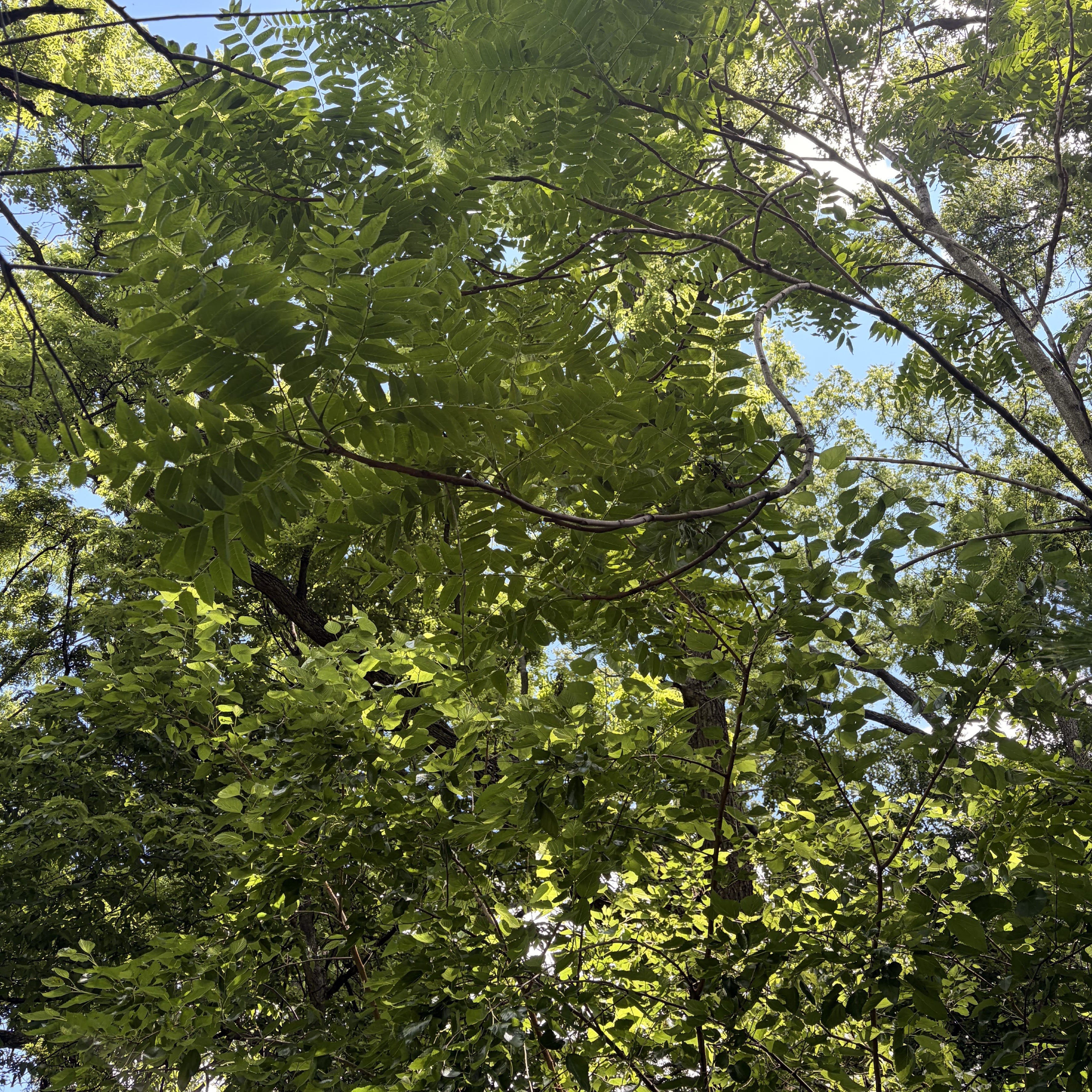
That plant was a Tree of Heaven. Seemingly overnight, it grew six feet tall, and had leaves that provided some privacy at just the right height. Amazing. Hallelujah. But if you know about invasive species, or if you clicked the link I provided, you know that these plants are nothing to celebrate. “Devilishly invasive”, you could call them (The Nature Conservancy did). They grow fast, multiply quickly, and have booby traps in place so they can’t be easily killed (my words, not the Nature Conservancy’s). This species knows how to survive—and perhaps that’s why they’re, like, the one thing in our yard the deer can’t kill. Anyway, Matt is following the internet’s instructions on how to safely remove them without accidentally making them multiply faster.
Sometimes the things that grow the tallest or the fastest aren’t necessarily good.
Tree Carnage
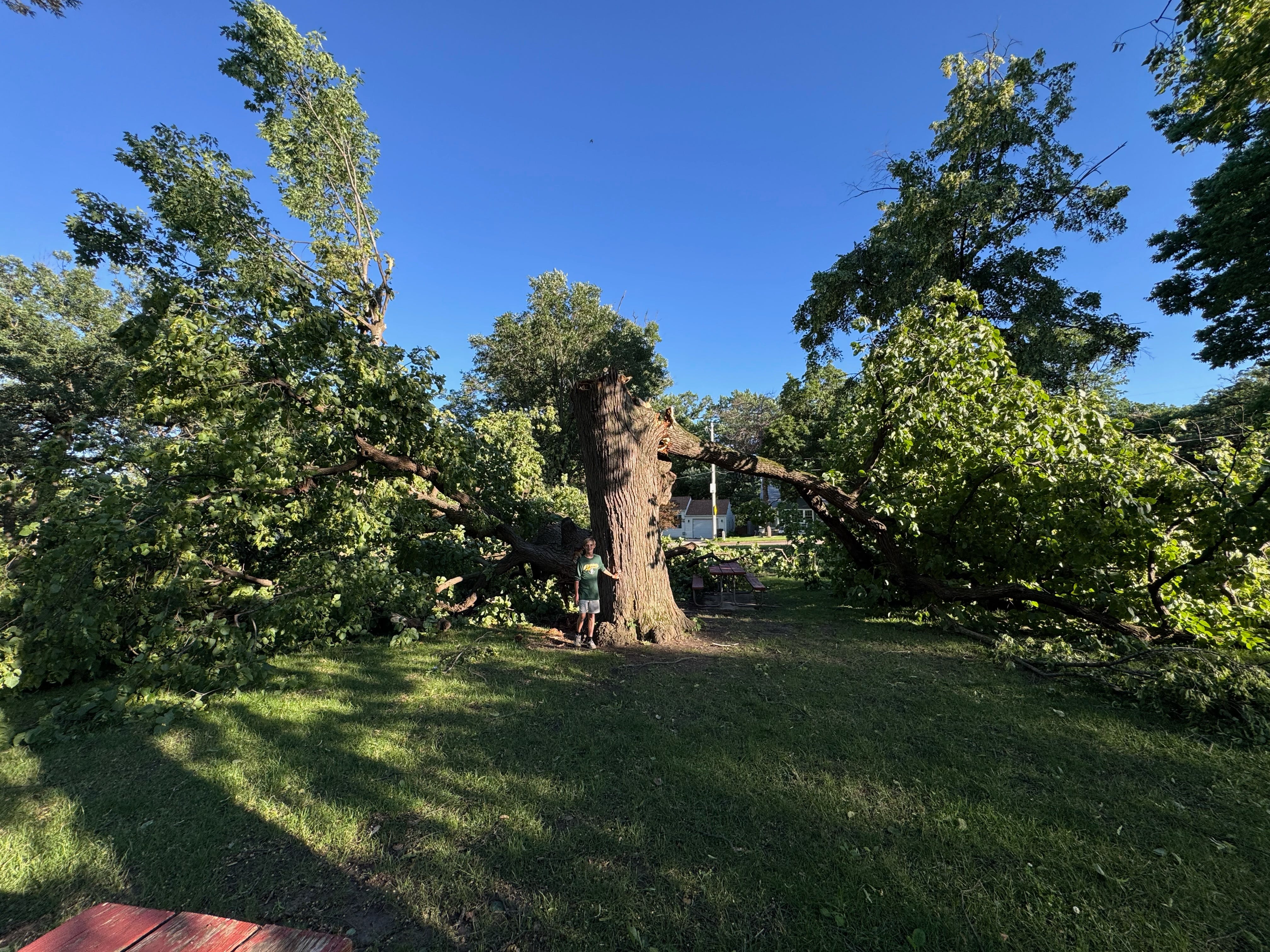
One morning in early June, we woke up in a house without power and white out conditions outside our windows due to wind and rain. Our boys went outside to play with their neighborhood buddies like they’ve been doing every day this summer (for which I am very thankful—the dream of the 90s is alive and well!); however, I worried about downed power lines, so I went out shortly after them to reign them in. I found them at the park near our house, next to a very large tree that up until that morning looked perfectly healthy, but was currently in two pieces with half of it laying on the ground. We awed at the spectacle, and asked each other whether anyone had heard it fall (no one did). Filled with maternal instincts and anxiety, I was giving the boys very strict parameters as to where they were and were not allowed to play, and as I was talking, a cracking sound came from that large tree. We watched as the other half of it fell to the ground, just a few yards from us (pictured below). Thankfully, we were safe, but that was the end of playing outside for that morning.
Another tree at the same park fell victim that day. Same story. Tall, healthy looking tree. The tree autopsy that I performed with my eyes and lack of education on the matter indicated that both trees were slightly hollow inside. The downpour of rain weakened them from the inside, and a gust of wind hit each one at just the right angle and force, causing their dramatic collapse. Ask me more about arboriculture; I’m making it up as I go!
Even tall, strong, healthy trees can get pushed over by a little wind and rain every now and again. Also, keep your distance from giants as they are falling to the ground.
The Understory
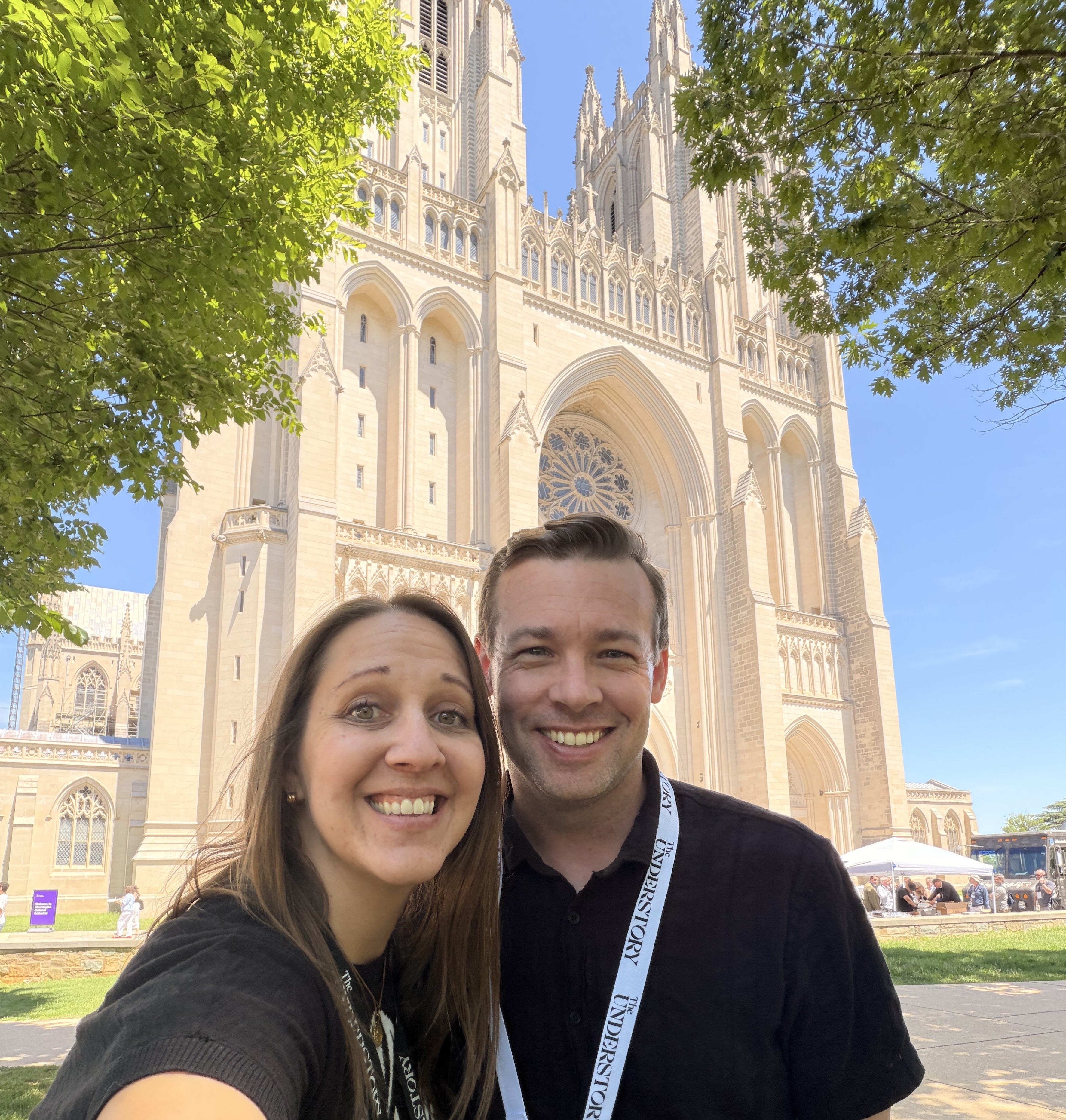
Matt and I spent the last few days of May at The Understory Festival in Washington DC, and then we spent the better part of the following week working with a few others to turn some portions of the festival into a new podcast. I enjoy podcast work, and I enjoyed getting to revisit these talks. Anne Snyder explains the concept of The Understory best, because she is the mastermind behind it, but my Cliff’s Notes version goes something like this: the health of a forest is not best seen in how tall and strong the trees are, but in the health of what’s happening on the forest floor—the quality of the soil, the fungi, and all the other things that I’ve already demonstrated I know so much about. It’s not only new life you’ll find on the forest floor, there’s also death, decomposition. When we see a forest, we tend to let the tallest trees shape the story of what is happening there. But as I learned that morning of the power outage in early June, even healthy looking tall trees can fall without warning. Height and strength are not the whole story.
For example, when we look at the story of American Christianity, the tallest trees are not necessarily the healthiest (ahem, from where I stand, many of the tallest trees seem to be hollow inside and filled with vermin and disease). But there’s a whole other story happening on the forest floor, and that story can tell us what is to come; and that story could be really healthy, yet invisible at the moment. On a more personal note, this has been why I’m trying to expand my listenership beyond just Christian music and its strong algorithmic currents. The Christian music industry writ large these days feels more political than it does faithful to the teachings of Jesus. This isn’t new, but it doesn’t appear to be changing; so I’m adjusting because my soul is not aligned with MAGA in any way, and I don’t want to grow my music career like a deformed tree (if you’ll allow me to mix metaphors all willy nilly). I am still a Christian, and I do have plenty of people in my life who encourage me in my faith, so I’m doing fine personally, but I have by in large, lost hope in the American church. However, the Understory Festival brought encouragement to my soul, and helped me to feel like I’m truly not alone in feeling this way, and neither are my friends who share my same frustrations. And more than that, it helped to spark a new imagination for what could be in the larger story of *American Christianity. MAGA evangelicalism dominates the markets and the headlines, but there are other, better stories beneath the surface. Not just the Understory Festival, but in all sorts of organizations, churches, non-profits—small and large alike. Like Pope Leo, for example. He’s telling a story that sounds more like Jesus than it does like American capitalism or MAGA politics.
There is more happening beneath the surface than what is most obviously perceived, and “the understory”, although often unseen, is where the broader story and the story that reaches into the next generation is being written.
*I’m being lazy when I use the term “American church”. Sometimes I mean something broader than that (like when referencing Pope Leo; or when talking about the Understory Festival because that also has strong Canadian roots, so in that context, I mean “North American”), and sometimes I mean something narrower than the “American church” (like maybe I’m using that terminology as shorthand for MAGA evangelicalism, or white evangelicalism, etc).
Metaphors, Combine!
I’ve been trying to apply this concept on a more personal level, to things that make me feel powerless, like being an independent artist. The tallest trees at any given point of time won’t always remain the tallest, sometimes invasive species can grow really tall and suck the nutrients out of nearby plants, and other things that get overlooked still play a crucial role in the larger ecosystem. It’s hard to watch billionaires (and a trillionaire, could you be serious) shape the markets through sheer force. It can be hard to watch other peoples’ careers shoot up like a pine tree while I still feel like a sapling. And all the faith stuff I mentioned is honestly way harder. These things make me feel powerless. Like I’m on the bottom of a forest floor, at the mercy of the everything that looms large above me. But, I’ve seen big, tall, healthy trees fall. I’ve seen invasive species take over and then get removed. I’ve seen natural prairies once again taking their rightful place in Iowa’s soil. I can’t affect much change, but I can affect some, so I’ll focus on tending to the soil around me, and doing the best I can to foster a healthy root system within me, so that I can be a part of growing something life-giving, healthy, and beautiful.
Bonus
Okay, one more thing. Every niche world has their own celebrities. The local Des Moines music scene has its own, and the world in which the Understory Festival lives has its own. There were lots of niche celebrities at the Understory Festival, and I’ve come to find out that even the biggest names there aren’t exactly household names in Des Moines, Iowa. But I’m able to highlight which names carry the weight of celebrity within this niche, mostly because of the work I’ve done on the podcasts. So, it’s always exciting for me to interact with David Brooks, and it was fun for me to briefly interact with Luke Bretherton at the Nespresso machine each morning; it meant something to me personally to meet Jon Guerra, and to interact with Josh Garrells’ daughter whilst waiting in line for peach cobbler. So for me, this is fun; for 95% of the people I know—who cares. Two things: 1) I love how the Understory Festival handled the concept of “celebrity”. They kept main speakers’ names a secret until the last minute, staying true to the integrity of the concept of the understory and not elevating certain names like you normally see at events like this. 2) Most people will be forgotten by people outside of their loved ones after they die. Some people will be remembered for a generation or two, and I bet that’s true of a number of these niche celebrities. But, when it comes to what names people will still know in 200 years, there is one person in this niche who comes to mind, and that is Francis Collins. Anyway, here is a picture of *me with Francis Collins (far right); I’ll point out that David Brooks is on the couch, too, for the benefit of my Uncle Mark, Matt’s Aunt Sally, and Andersen Coates.
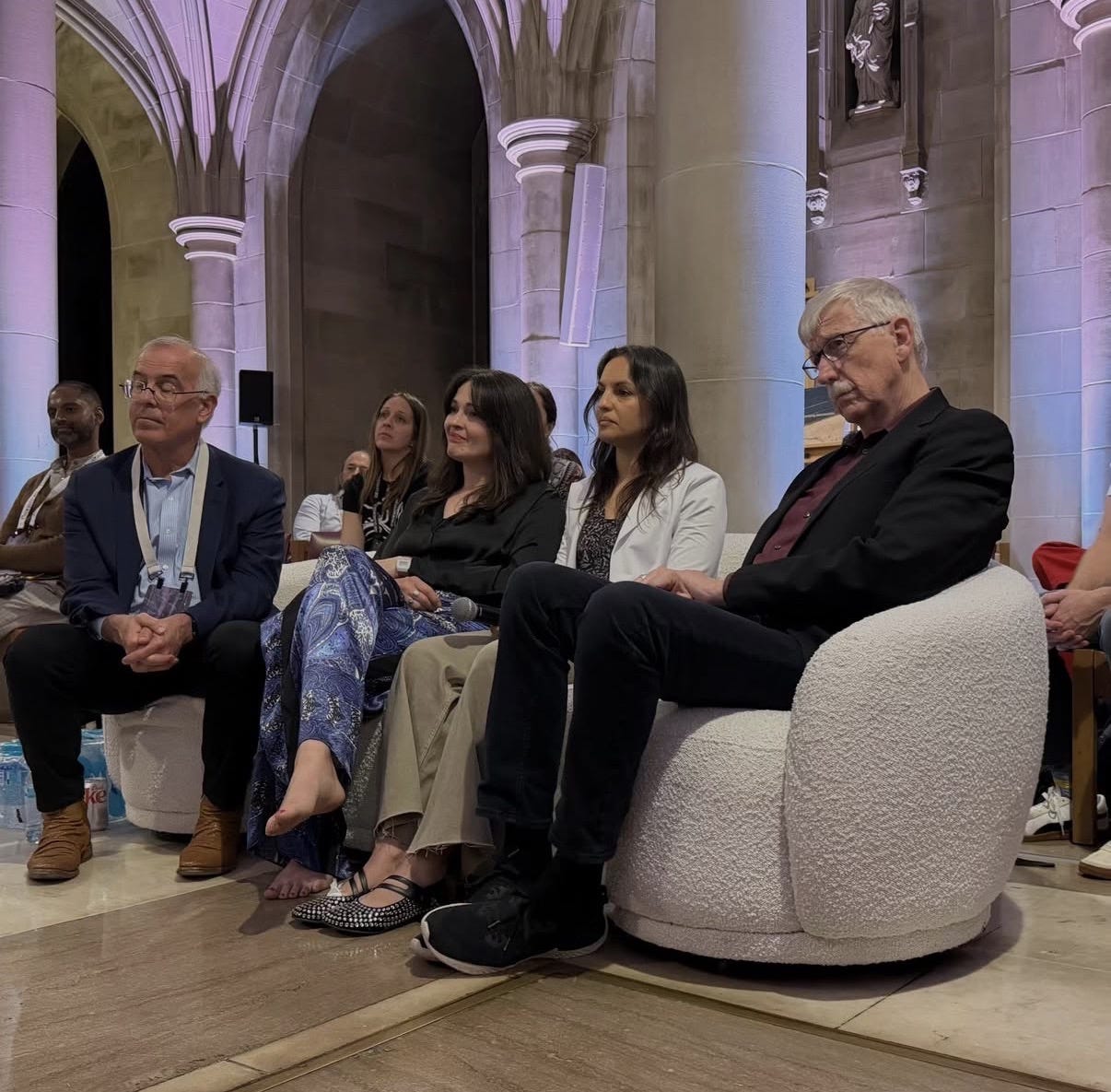
*We are all aware this is not a picture of me with Francis Collins, but it is true that it’s a picture that contains both me and Francis Collins. Ahem, if you don’t know who Francis Collins is: he mapped the human genome in the 1980s and he also played a big role in the development of the Covid vaccine (he was Fauci’s boss).